Affiliate disclosure and editorial method: MyReviews25 may earn a commission if you purchase through an affiliate link on this page, without an extra charge to you. This is an independent research-based 21-Day Smoothie Diet review, not a paid clinical trial, a documented personal 21-day test or individualized diet advice. We evaluated the program’s public description and independent nutritional guidance. We have not verified product-specific average weight-loss outcomes or every recipe’s nutrient adequacy.
The Smoothie Diet is a digital 21-day meal-planning program marketed by Drew Sgoutas. The headline idea is straightforward: replace two daily meals with recipes for smoothies, eat one regular meal and include up to two snacks. That structure might help some people organize their eating, but it is not a proven metabolic shortcut. Whether weight changes depends on the overall eating pattern, individual nutrition needs, health and long-term habits.
This 2026 review explains what the buyer gets, how the meal replacements are meant to work, why before-and-after testimonials are weak evidence, potential nutritional gaps, the costs of making the recipes and better alternatives for people who do not want a restrictive routine.
The Smoothie Diet Review: Quick Verdict and Program Facts
| Feature | What the program or evidence indicates |
|---|---|
| Type of purchase | Digital guide and recipes, rather than a subscription to delivered ready-made smoothies |
| Creator | Drew Sgoutas, identified by the seller as a health coach |
| Length | 21-day structured plan; seller also advertises an optional 3-day ‘detox’ |
| Core format | Two smoothie meal replacements, one solid-food meal, and up to two snacks |
| Recipe materials | Seller advertises 36 smoothie recipes, shopping lists, schedules and a transition guide |
| Dietary energy | A seller article describes about 1,450–1,500 calories a day as a sample plan—not a universal requirement |
| Clinical evidence | No independent randomized trial of this exact commercial 21-day plan was verified in this review |
| Best realistic use | Optional planning inspiration, provided total nutrition, suitability and sustainability are assessed |
| Main concern | Highly prescriptive meal replacement may undersupply protein, energy or other nutrients for some people |
The structure comes from the Smoothie Diet official site and its program explainer. Program promises, recipe counts and sample energy figures are seller statements; the site’s endorsements and dramatic transformation photos do not establish average customer results.
What Is Included in the 21-Day Smoothie Diet?
The vendor sells a downloadable plan intended to simplify shopping and meal decisions. According to its public materials, it includes recipes, schedules, meal and snack suggestions, shopping lists and advice about transitioning after the three-week period. It does not mean smoothies arrive at your doorstep, nor does purchasing the PDF guarantee adequate personalized dietary assessment.
An optional three-day detox is mentioned in the creator’s marketing. That is a promotional term, not a validated way to flush toxins from the liver, kidneys or body. We do not recommend extra-restrictive “detox” phases as a necessary preparation for healthy eating.
What a sample day looks like
A seller-authored sample schedule uses a breakfast smoothie, a whole-food lunch, a dinner smoothie and two snacks. It describes roughly 1,450–1,500 calories for a sample day. That figure may be insufficient for some adults and excessive for others, depending on age, body size, activity, health, pregnancy status and other factors. We are not recommending a calorie target or meal plan for readers.
The right question is not whether a day fits an advertised number; it is whether its meals collectively provide enough energy, protein, fat, fiber, essential nutrients and satisfying food for the person following it. A qualified dietitian can help evaluate the plan if there are health concerns.
Does the Smoothie Diet Work for Weight Loss?
A smoothie is food, not an active fat-burning treatment. Replacing higher-energy meals with smaller portions may lower total calorie intake and sometimes reduce weight. But adding calorie-dense smoothies to an otherwise unchanged diet could also increase energy intake. Results depend on the actual meals consumed, not the color, consistency or “detox” label of a drink.
The CDC describes gradual weight management as part of a healthy eating pattern, physical activity, sleep and stress management, and notes that gradual, steady loss is generally more likely to be maintained than rapid loss. A fixed 21-day transformation promise is not a substitute for those principles.
No verified ‘8–15 pounds in 21 days’ average
The previous MyReviews25 article claimed that most participants would lose 8–15 lb over three weeks, including 5–8 lb in the first week. We found no adequate independent product-specific dataset establishing those numbers as the average or typical outcome. They have been removed from the recommendations and FAQ. Individual changes in body weight can reflect water, glycogen, gastrointestinal contents and body fat in varying proportions.
The National Institute of Diabetes and Digestive and Kidney Diseases (NIDDK) advises assessing programs by their published studies, average results, nutritional design and maintenance support. This review cannot authenticate a controlled clinical trial showing that the branded Smoothie Diet outperforms other appropriately balanced plans.
Do the smoothies ‘detox’ the body?
No credible reason has been established to treat an optional smoothie cleanse as a toxin-removal therapy. The body has normal systems, including the liver and kidneys, that process and remove substances. The National Center for Complementary and Integrative Health says the evidence for detox diets is limited and warns that some restrictive approaches can lead to dehydration or nutritional inadequacy.
How to Judge Whether a Smoothie Is a Complete Meal
Johns Hopkins Medicine advises that smoothies can provide useful protein, fiber, vegetables and other nutrients when the ingredients are selected carefully. But a fruit-only drink with water or juice is not necessarily a nutritionally balanced meal replacement. A smoothie made only of berries and spinach may be tasty while lacking enough protein and fat to satisfy someone replacing lunch or dinner.
| Component | Examples to look for | Why it matters |
|---|---|---|
| Protein | Greek yogurt, unsweetened soy yogurt, tofu or an appropriate protein supplement | Helps support satiety and normal maintenance of muscle |
| Produce | Berries, banana, spinach or kale | Supplies dietary variety and micronutrients; portions affect total carbohydrate |
| Fiber | Whole fruit, vegetables, ground flax or chia | Contributes to fullness and digestive health |
| Fat | Nut butter, seeds or avocado | Adds essential fats and energy; portion sizes affect calorie content |
| Liquid | Water, milk or a fortified unsweetened alternative | Changes taste, protein and total nutrition; juice may add substantial sugar |
| Dietary diversity | Regular meals with grains, legumes, vegetables and other food groups | A full day’s nutrition should not depend on one smoothie recipe |
Source: Johns Hopkins Medicine, “How to Make a Healthy Smoothie.” There is no single universal smoothie composition that meets everyone’s meal requirements. Check allergens, ingredient labels, portion sizes and total food intake.
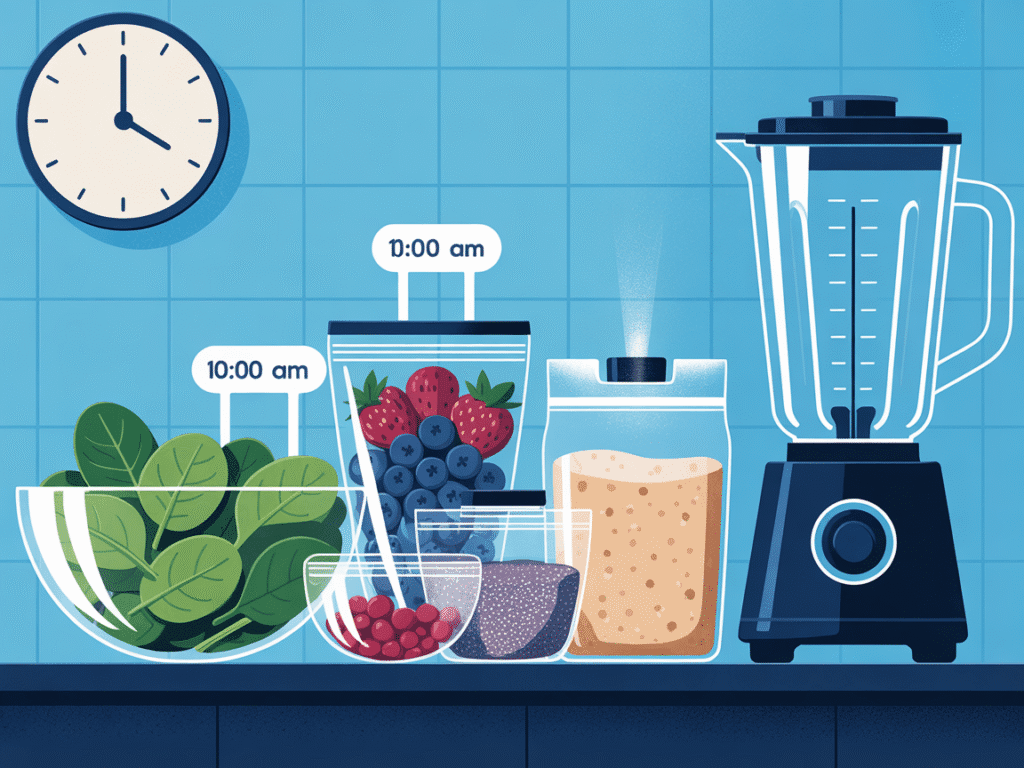
Illustration: The ingredients pictured are examples of possible smoothie components, not a verified image of the creator’s recipes or evidence that a particular smoothie meets your nutritional needs.
Pros: Where a Structured Smoothie Plan May Help
- Convenience: Preselected recipes and shopping lists can simplify planning, particularly for someone who otherwise skips meals or relies on last-minute convenience food.
- Produce variety: Smoothies can provide a convenient way to include fruits and vegetables when eaten as part of a balanced food pattern.
- Easy customization: Many home recipes permit changes for taste, allergies or access to ingredients—although modifications may alter the intended nutrient content.
- Potential structure: A short planning framework can help some people reflect on habits and cooking routines without needing a complicated app.
- No special supplement necessary: A smoothie can be made with ordinary groceries; it does not require branded fat-burning powders.

Illustration: A simple kitchen setup can make meal preparation convenient, but preparation speed and a simplified shopping list do not establish clinical weight-loss results.
Cons and Safety Concerns
Energy and protein may not fit the individual
Replacing two main meals each day can be restrictive. The seller’s sample calorie level is not appropriate for everyone, and some smoothie recipes may lack enough protein or other nutrients unless thoughtfully composed. Inadequate intake over time may contribute to hunger, fatigue, loss of lean tissue or difficulty sustaining normal activities. Avoid assuming that rapid early scale changes indicate better health.
Blood sugar, medications and other health conditions
Fruit and carbohydrate portions vary widely, and beverages may be consumed quickly. People with diabetes, kidney disease, gastrointestinal conditions or medications affected by meal timing or dietary changes should discuss major diet changes with a clinician or registered dietitian. During pregnancy, breastfeeding or growth, restrictive meal-replacement plans deserve particular caution. Anyone with a current or past eating disorder should avoid weight-focused restrictive programs without appropriate professional support.
Sustainability and disordered eating concerns
Eating mainly from a fixed set of recipes can become socially inconvenient, repetitive and difficult to sustain. The vendor’s marketing also calls some eating days “cheat days” and offers rapid-loss testimonials. These terms can promote an unhelpful all-or-nothing view of food. Consider whether a plan helps establish enjoyable habits after day 21, not merely whether it produces an early change on the scale.
Groceries, equipment and actual total cost
The ebook cost is only one part of the expense. You may need fresh or frozen produce, yogurt, seeds, other protein sources, storage supplies and a blender. The final grocery cost depends on local prices and substitutions. If you already have access to free smoothie recipes, a paid planner may add little value.
Who Should Consider It—and Who Should Avoid It?
The program may appeal to an adult who enjoys smoothies, can independently evaluate nutritional balance, and wants a digital menu-planning aid rather than a guaranteed fat-loss method. Some may prefer to use individual recipes within a more flexible pattern instead of replacing two daily meals.
It is not a sound default choice for everyone. Children and teenagers, people who are pregnant or breastfeeding, those with eating disorders or at risk of them, people managing relevant chronic conditions or medication effects, and anyone with signs of undernutrition should seek qualified guidance before considering a restrictive approach. The NIDDK recommends individualized assessment and programs with appropriate professional support.
Smoothie Diet Reviews and Before-and-After Photos: Can You Trust Them?
The seller’s website includes enthusiastic named testimonials and dramatic descriptions of weight changes. These are marketing statements that we have not independently authenticated. We cannot calculate a typical outcome, complication rate or long-term maintenance rate from selected success stories, anonymous comments or before-and-after pictures.
A credible assessment would require information on how many people enrolled, how many completed the plan, how their starting health and eating patterns differed, average outcomes including those who did not finish, any adverse events and follow-up after the program ended. We found no independently verified data set meeting that standard for the branded plan.
An honest review can recognize that a user may enjoy the recipes without treating enjoyment as proof that a paid diet program is safe, uniquely effective or suitable for long-term use.
Practical Meal Prep Without Extreme Restrictions
Smoothie-making itself need not be complicated. You can preportion washed produce and suitable ingredients into freezer bags or containers, then blend with an appropriate liquid when needed. Keep frozen ingredients frozen and practice basic food hygiene. Do not assume every blended mixture stays safe for an arbitrary number of days; food safety depends on ingredients, temperature, handling and storage.
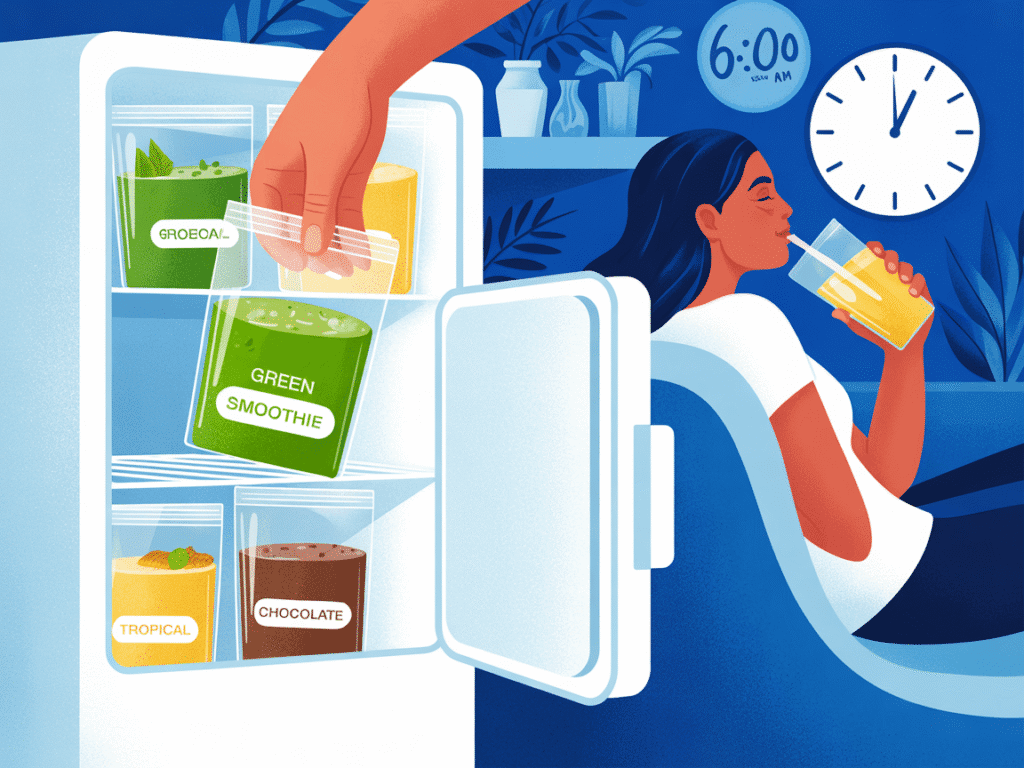
Illustration: Freezer portions can simplify preparation. Label containers and observe appropriate storage and food safety practices. This picture does not depict a product purchased from The Smoothie Diet.
For more general ideas, see our beginner smoothie recipes. Our Ninja TB401 blender review discusses one kitchen appliance, but a premium blender is not required to make a basic smoothie.
How Does the Paid Program Compare With Free Recipes?
| Decision factor | Paid 21-Day Smoothie Diet | Free recipes and flexible meal planning |
|---|---|---|
| Structure | Seller advertises a ready-made 21-day sequence | You choose recipes and meals as needed |
| Recipes | 36 smoothie recipes advertised by seller | Many freely available recipes; quality varies |
| Costs | Digital product fee plus groceries | Usually groceries and existing equipment |
| Personalization | Not independently established as clinical tailoring | Can be adjusted to preferences; professional help still useful |
| Evidence for outcomes | No verified controlled product trial presented here | No generic recipe guarantees weight loss |
| Long-term flexibility | Plan includes a transition guide, per seller | Habit-focused approach can be maintained indefinitely |
Neither approach automatically produces weight loss or nutritional adequacy. Use published ingredient information, personal needs, access to foods, affordability and professional advice where appropriate rather than assuming a purchased plan is superior.
Smoothie Diet Pricing, Digital Access and Refunds
The program’s official sales site describes instant digital access. We have not independently verified the current checkout price, whether additional offers appear after checkout, the refund conditions or the exact contents of the latest downloaded package. Before ordering, read the payment processor details, guarantee window, digital-access terms, any recurring billing language and refund requirements.
The linked sales page may include a commission for the website. You may inspect the current Smoothie Diet sales offer and checkout terms (affiliate link). Opening the offer is not an endorsement of the claimed results and does not establish that the plan suits you. You can also read the public product overview without purchasing.
Frequently Asked Questions
How much weight will I lose in 21 days?
There is no reliable branded-program average established here. The earlier “8–15 pounds” claim was unsupported. Outcomes vary widely and can include changes in water weight; nobody should interpret testimonials as a forecast of their results.
Are the Smoothie Diet and a smoothie detox the same thing?
No. The regular program is promoted as two smoothie meals, a whole-food meal and snacks over 21 days. The seller also offers a separate optional three-day “detox” phase. Detoxification benefits are not clinically established by that marketing label.
Do I need to replace every meal with a smoothie?
No. The marketed plan replaces two meals and includes one regular meal and optional snacks. However, even two replacements may be unsuitable or nutritionally incomplete for some people.
Is the Smoothie Diet safe for people with diabetes?
People managing diabetes, blood glucose medicines or other relevant health conditions should consult a qualified clinician or registered dietitian before changing meal composition or timing. Carbohydrate amounts vary across smoothie recipes.
Does drinking smoothies burn belly fat specifically?
No smoothie ingredient or meal-replacement technique reviewed here is established to target fat loss from one specific body area. Overall eating patterns and individual circumstances matter.
Can I drink coffee or exercise?
Coffee and activity choices depend on health, overall intake, sleep and tolerance. The program is not a reason to skip appropriately balanced food or automatically avoid exercise; ask a professional for personal guidance if energy intake or a condition raises concerns.
Do I have to buy special smoothie packets?
No. The program is a digital set of recipes and shopping guidance, not a requirement to buy branded prepared smoothies. Ordinary grocery-store ingredients are typically used.
Can I store smoothies in the refrigerator overnight?
Use clean equipment and refrigerate perishable ingredients promptly at safe temperatures. Texture and safety vary by recipe, dairy content and handling; don’t rely on a blanket storage guarantee. When uncertain, make a fresh portion.
Is the program backed by a clinical trial?
We have not independently verified an appropriately designed randomized controlled trial of this exact commercial Smoothie Diet program showing a particular weight-loss outcome or better long-term maintenance than other balanced eating plans.
What happens after the 21 days?
The seller advertises a transition guide. Sustainable habits, sufficient nutrition and an approach that fits real life are more important than continuing a restrictive schedule indefinitely.
Final Verdict: Is the 21-Day Smoothie Diet Worth Buying?
The Smoothie Diet can be viewed as a structured recipe and shopping planner, not an evidence-proven rapid-weight-loss solution. It may simplify meal preparation for people who genuinely enjoy smoothies. The trade-offs include a paid digital guide, ongoing grocery costs, potentially restrictive meal replacement and lack of independently verified product-specific outcomes.
MyReviews25 does not endorse rapid-loss promises, a universal calorie goal, or a “detox” phase. For someone looking for nutrition guidance, start with sound principles from Johns Hopkins Medicine and the NIDDK’s weight-management program checklist. The purchase decision should rest on whether the organization of the recipes is worth the price—not a guaranteed 21-day transformation.
This review is informational and does not replace medical care. If changes to eating patterns are medically significant for you, discuss them with a qualified professional.
Sources, Verification and Editorial Disclosure
Seller documentation: The Smoothie Diet official program description; Drew Sgoutas’ 21-day plan explainer; vendor sample day and calorie example. Independent sources: NIDDK: Choosing a Safe and Successful Weight-Loss Program; CDC: Steps for Losing Weight; Johns Hopkins: How to Make a Healthy Smoothie; NCCIH: Detoxes and Cleanses. Manufacturer claims have not been independently verified as clinical outcomes.
Last editorial review: October 2026. We have not personally followed this plan for 21 days or validated claims from individual customer testimonials. Affiliate compensation does not make a weight-loss program effective or medically appropriate.
Disclosure: This post contains affiliate links. If you make a purchase through these links, I may earn a small commission at no extra cost to you.