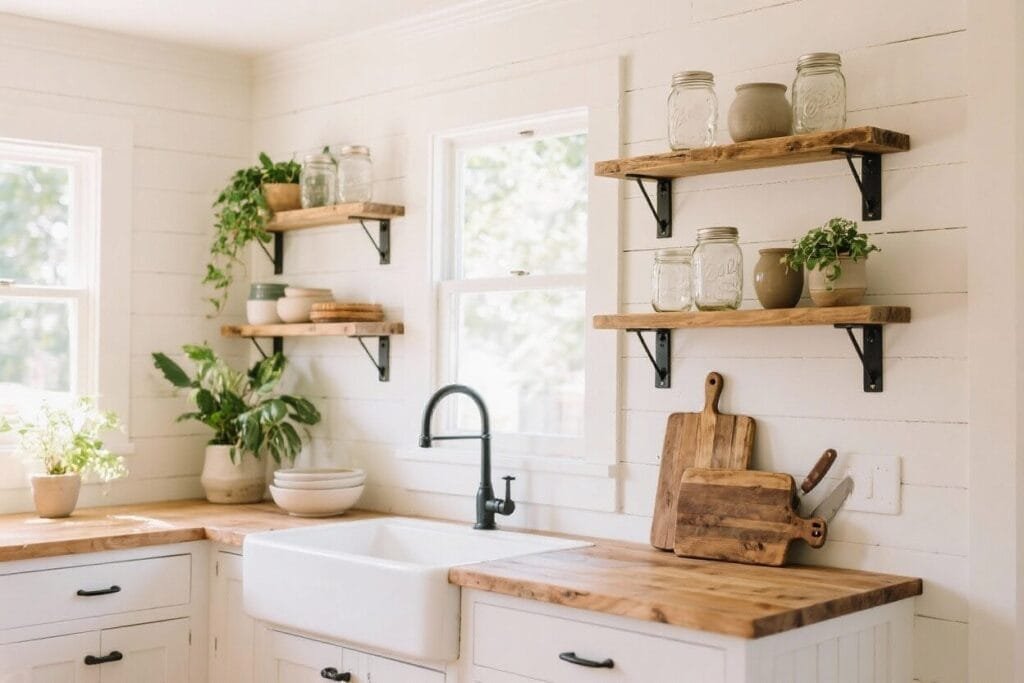

Your kitchen called—it wants personality. Rustic shelves are the easiest way to bring that farmhouse charm without ripping out cabinets or selling a kidney for custom carpentry. We’re talking warm woods, black metal brackets, and that perfectly imperfect look that says, “Yes, I bake sourdough…and sometimes I just reheat pizza.”
Ready to DIY shelves that look designer but cost grocery money? Let’s build the kind you’ll style and restyle a thousand times. Here’s the plan.
1. Choose Your Wood Like A Farmhouse Snob (It Matters)
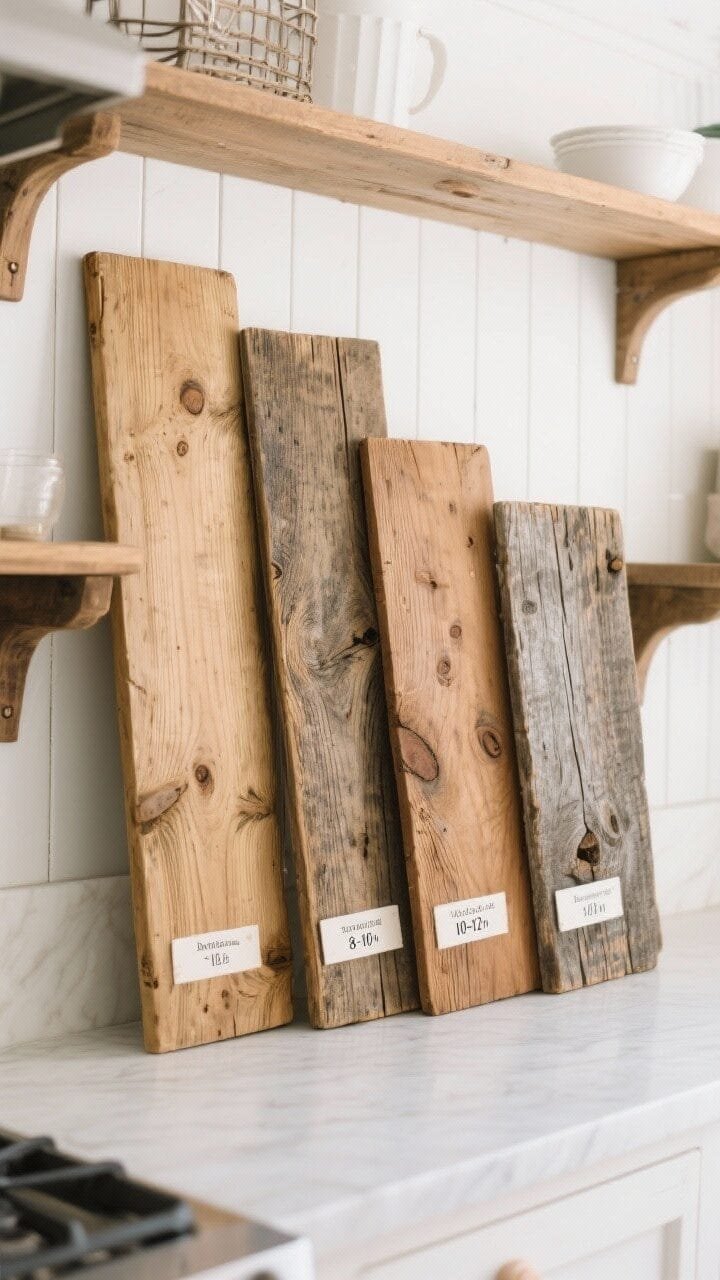
Not all boards are created equal. The magic of rustic shelves is in the wood—grain, knots, and a little character. If the wood looks like it has a story, you’re on the right track.
Best Wood Picks
- Pine: Budget-friendly, easy to stain, takes on that farmhouse look fast. Soft, so seal it.
- Douglas fir: A touch pricier than pine, great grain, sturdy for heavier loads.
- Oak: Durable and luxe. If you want “heirloom,” go oak.
- Reclaimed barn wood: Peak rustic vibes. Very on-brand, but prep it carefully (sand, clean, seal).
Pro Tips For Sizing
- Depth: 8–10 inches works for mugs and spices; 10–12 inches for plates and canisters.
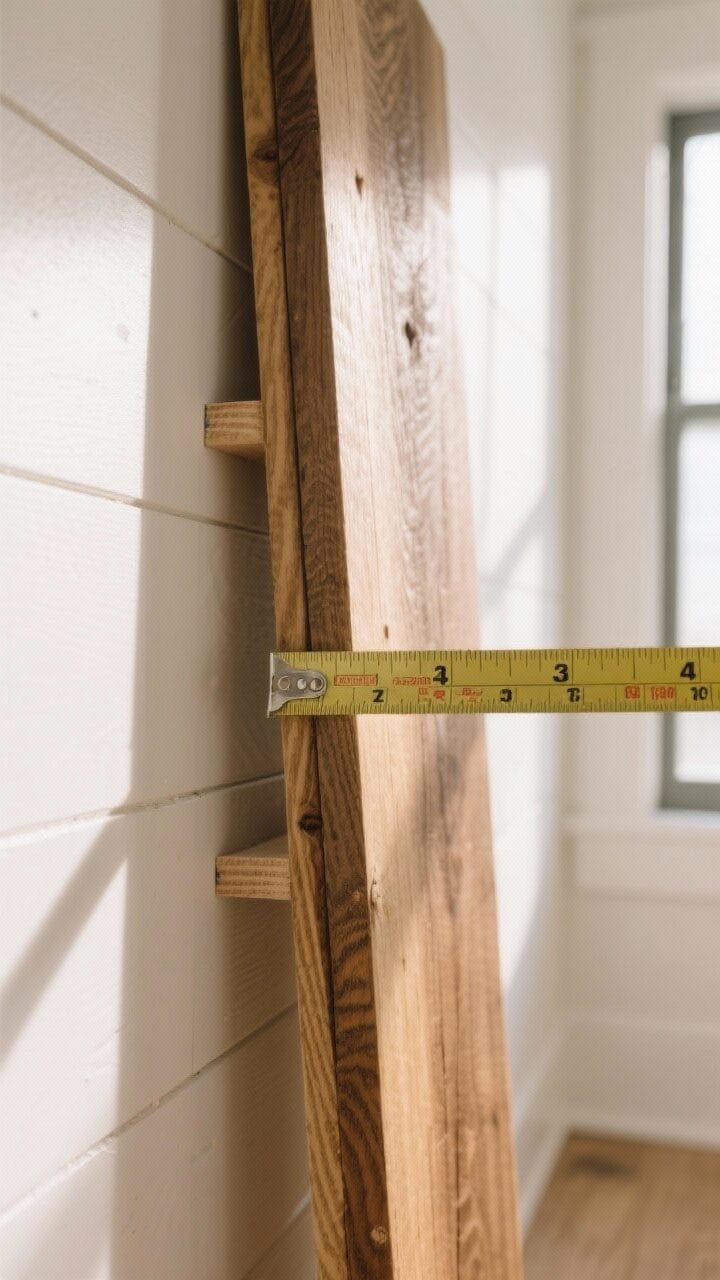
- Thickness: 1–1.5 inches looks substantial without sagging. Thicker = more farmhouse drama.
- Length: Keep shelves under 4 feet unless you’re using center brackets or beefier boards.
FYI: Buy straight boards. Sight down the edge at the store—the fewer bows and twists, the happier your level will be later.
2. Finish Like A Pro: Stain, Distress, Seal (So It Actually Looks Vintage)
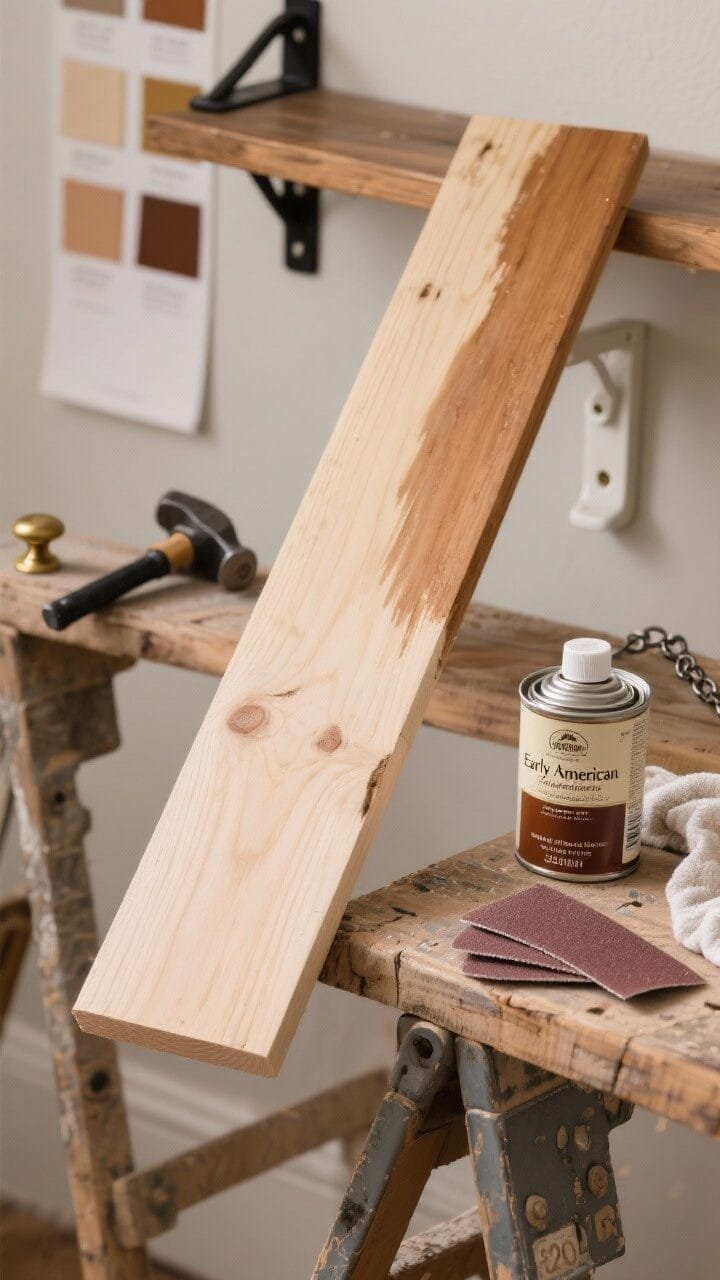
This is where plain wood becomes farmhouse gold. A slightly aged finish can make even new pine look like it’s lived a life on a country porch.
Simple Finishing Recipe
- Sand: Start with 120-grit to knock down splinters, then 220-grit for smooth edges. Round the corners a touch for that soft, worn-in look.
- Pre-stain conditioner: Especially for pine—prevents blotchy stain (the enemy of chic).
- Stain: Classic picks—Early American, Provincial, or Special Walnut. Wipe on, wait 5–10 minutes, wipe off excess.
- Optional distressing: Lightly tap edges with a chain or hammer, then re-sand so it doesn’t snag. Less is more—subtle beats “attacked by tools.”
- Seal: Two coats of matte polyurethane or water-based poly for kitchens. Oil-based warms the tone; water-based keeps it neutral.
Color Combos That Always Work
- Warm wood + black brackets: The classic farmhouse look.
- Soft gray stain + brass: Elevated rustic with a little shine.
- Natural wood + white brackets: Airy cottage vibes, great for smaller kitchens.
Pro move: Stain both sides—even the underside. It helps prevent warping and looks finished from every angle.
3. Hardware That Makes It: Brackets, Spacing, And Solid Mounting
The right hardware takes your shelves from “cute” to “who built these?” You want sturdy, matching, and straight. Sounds basic, but it’s the difference between magazine-worthy and mildly crooked.
Bracket Styles You’ll Love
- Forged iron L-brackets: Bold, black, and timeless. Screams farmhouse in the best way.
- Pipe brackets: Industrial touch—cool with darker woods and subway tile.
- Floating shelf hardware: Minimal and clean if you want the wood to shine.
Mounting 101 (Don’t Skip This)
- Find studs: Use a stud finder. No studs? Use heavy-duty anchors rated for your load.
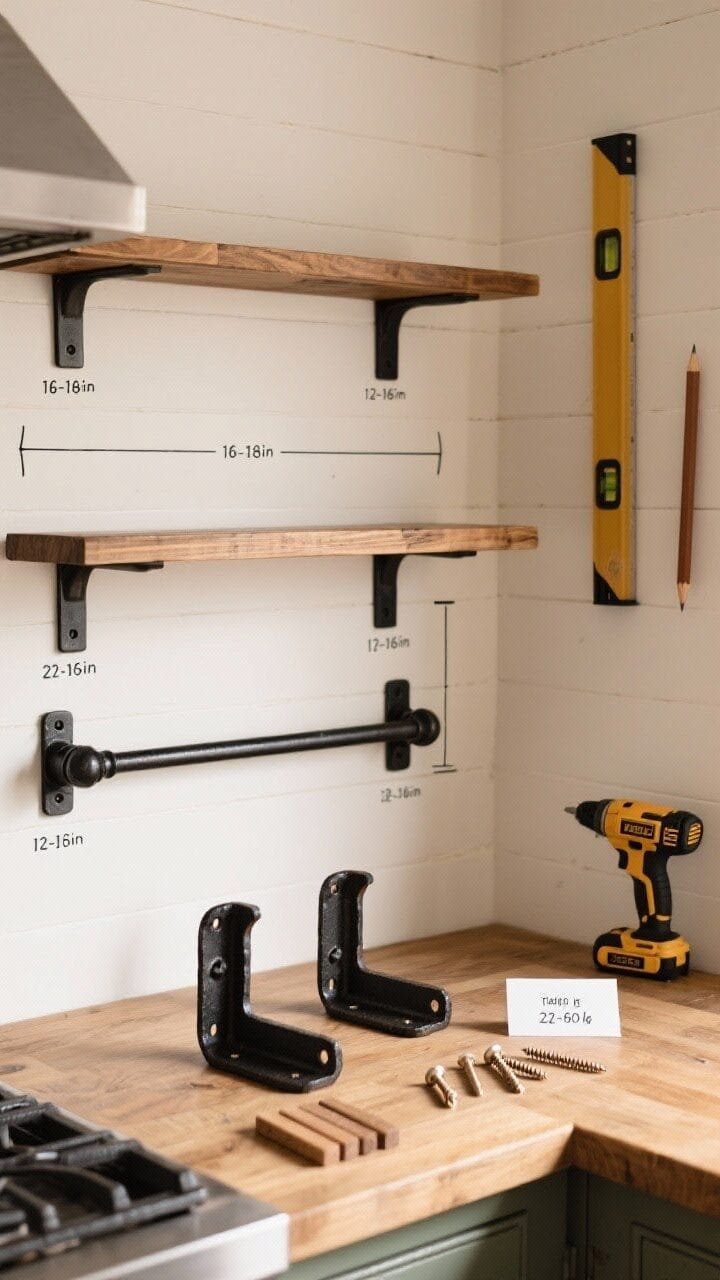
- Height: 16–18 inches above the counter is ideal for the first shelf; leave 12–16 inches between shelves.
- Level, then level again: Mark a light pencil line across both bracket locations. Your eyes will thank you later.
- Weight: Typical setup holds 25–50 lbs per shelf with proper anchoring. Plates? Yes. Cast iron collection? Maybe not all of it.
IMO, black brackets are an instant upgrade. They hide smudges, match most appliances, and look designer without trying too hard.
4. Style Like A Pro: Curate What You Display (And What You Don’t)
Here’s the secret: your shelves are not storage, they’re a vibe. Mix pretty with practical so it looks intentional—not like you panicked and put all your mugs on display.
Mix Heights, Textures, And Tones
- Rule of thirds: Style in groups of three—one tall, one medium, one small.
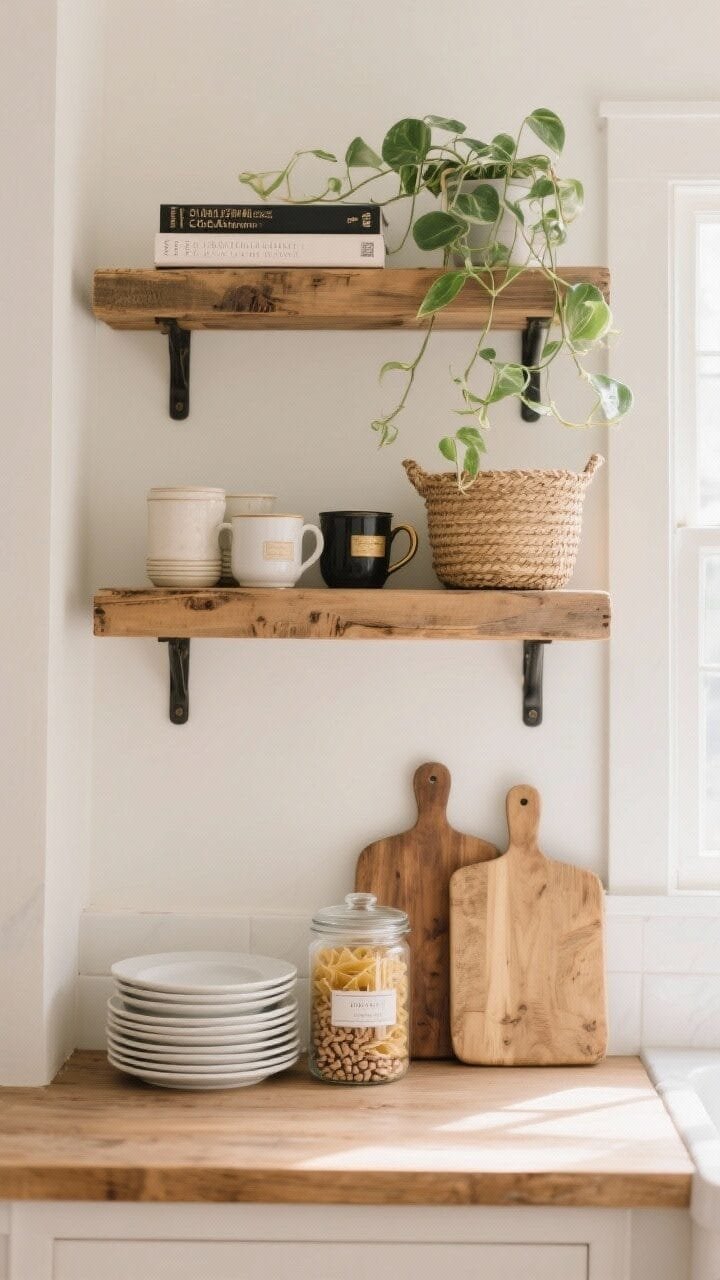
- Layer textures: Ceramic mugs, woven baskets, linen napkins, wooden cutting boards. Boom: visual interest.
- Balance color: Anchor with warm wood, add whites and creams, sprinkle in black or brass.
What To Put On Rustic Shelves
- Everyday dishes: Stacks of white plates never fail. They also make you look like you have your life together.
- Glass jars: Pasta, beans, flour—functional and pretty. Label them if you’re that person (respect).
- Cookbooks: Lay a couple horizontally, tuck a small plant on top. Instant magazine moment.
- Cutting boards: Lean a few behind items to create depth and soften the straight lines.
- Greenery: Small potted herbs or trailing pothos. Kitchens love a little life.
Avoid The Clutter Trap
- Leave negative space. Your eye needs breathing room.
- Stick to a tight color palette—3–4 colors max.
- Rotate seasonally: swap in a ceramic pumpkin or a linen runner. Small changes, big mood.
Pro tip: Put the pretty stuff at eye level and the utilitarian things lower. You’ll reach for them more, and the shelf will look balanced.
5. The Weekend Build: Step-By-Step, From Tools To Ta-Da
You can knock this out in a weekend, promise. Here’s the streamlined, no-drama method to build and install DIY rustic shelves for a farmhouse kitchen.
What You’ll Need
- Tools: Stud finder, level, drill/driver, tape measure, miter or circular saw (store can cut), sander, brush or lint-free cloths.
- Materials: 1–2 wood boards (sized to your wall), brackets (2 per shelf, 3 for long spans), wood screws, anchors (if no studs), stain, pre-stain conditioner, matte polyurethane, painter’s tape, felt pads.
Step 1: Measure And Visualize
- Mark your ideal shelf heights with painter’s tape. Step back, squint, adjust. Trust your gut—it’s your kitchen.
- Confirm clearances for your tallest items (cereal jars, pitchers). No head bonks on everyday grab-and-go.
Step 2: Cut, Sand, And Prep
- Cut boards to length or have the store do it. Dry-fit on the wall to confirm scale.
- Sand edges smooth, round corners slightly for that “old but loved” look.
- Wipe down with a tack cloth to remove dust.
Step 3: Stain And Seal
- Apply pre-stain, then your stain of choice. Wipe off excess for a natural grain reveal.
- Let dry fully, then add two coats of matte poly, sanding lightly with 320-grit between coats.
Step 4: Mount Brackets Like A Perfectionist
- Find studs and mark bracket holes. Use a level to keep everything aligned.
- Drill pilot holes; mount brackets with appropriate screws. If you must use anchors, choose heavy-duty ones rated for more than your expected load.
- Double-check spacing—brackets should be inset a couple inches from the ends of the shelf for strength and style.
Step 5: Attach Shelves And Style
- Set boards on brackets. Secure from underneath if your brackets allow; otherwise, add clear silicone dots or felt pads to prevent slipping and protect finishes.
- Style with your best-looking everyday pieces. Keep the top shelf lighter and decorative; lower shelf can be more functional.
Maintenance And Longevity
- Wipe with a damp cloth; avoid harsh cleaners so the finish lasts.
- Re-seal annually if you cook a lot (steam and grease are sneaky).
- Shift items occasionally to prevent pressure dents and sun fade patterns.
Bonus move: Add a small under-shelf rail with S-hooks for mugs or measuring spoons. It’s cute and ridiculously handy.
That’s it—you’ve got rustic shelves that look custom, cost-friendly, and totally at home in a farmhouse kitchen (even if your farmhouse is a city apartment with great lighting). Take a pic, show it off, and then make something delicious to put on those shelves. You earned it.

- DIY Your Bookshelf: The unique structural design allows you to combine this wall-mounted ladder shelf at will. If 2 or m…
- Sturdy and Stable: The wall mounted ladder shelf is made of premium particleboard and elegant matte black iron pipes, gi…
- 6 Tier Bookcase: The bookcase consists of 5 tiers of 9.4″ x 23.6″ shelves arranged one after the other, with each tier 1…


- SIZE: Fully assembled dimensions(inches): L: 23.6 x W: 9.8 x H: 78.8. Clearance between shelves: 12.6 inches
- HIGH LOADING CAPACITY: Constructed with high-quality durable MDF(Non-solid Wood) and sturdy metal pipe allow it to bear …
- FITS IN TIGHT SPACES: Slim shape design will enable this to fit perfectly into the small, awkward place in your room and…

- Versatile Ladder bookshelf: The wooden narrow bookshelf functionality and aesthetics, perfect as a bookcase in the study…
- Very Sturdy: Made of premium panels and sturdy metal, the tall bookshelf is durable. Each shelf can undertake up to 22 l…
- Perfect and Easy to Put Together: This 6-tier open display shelf comes with detailed instructions and clearly labeled pa…
Author

Disclosure: This post contains affiliate links. If you make a purchase through these links, I may earn a small commission at no extra cost to you.