
Affiliate disclosure and research method: This guide includes a retailer affiliate link, which may earn MyReviews25 a commission at no additional cost to you. The setup and storage information is based on TP-Link’s official EC70 support documentation and product specifications. This is not a personal long-term test or a guarantee of home security.
The Kasa EC70 Spot Pan Tilt is a 1080p indoor Wi-Fi camera designed for remote viewing, motion alerts and local recording. However, useful day-to-day results depend on more than a specification sheet. You need to know the exact hardware version, choose the correct microSD card, configure an account, place the camera thoughtfully and decide whether you want cloud clips.
This page focuses on setting up the Kasa EC70, comparing microSD with Kasa Care, and reducing avoidable privacy risks. For a broader discussion of picture quality, features, alternatives and purchase suitability, read our Kasa EC70 product review.
Before Setup: Check the EC70 Hardware Version
TP-Link lists multiple hardware revisions, including V1, V2, V4, V4.60 and V4.80, with different manuals and firmware releases. The printed hardware revision on the product label helps you select the right instructions. Device packaging, adapters and memory compatibility can vary.
For example, TP-Link’s older EC70 V1 product page specifies up to 128 GB microSD storage, while the EC70 V4 page lists up to 256 GB. Do not assume every EC70 accepts a 256 GB card. Check the hardware revision and official compatibility list before buying memory.
EC70 Setup: A Practical Checklist
1. Choose a suitable location
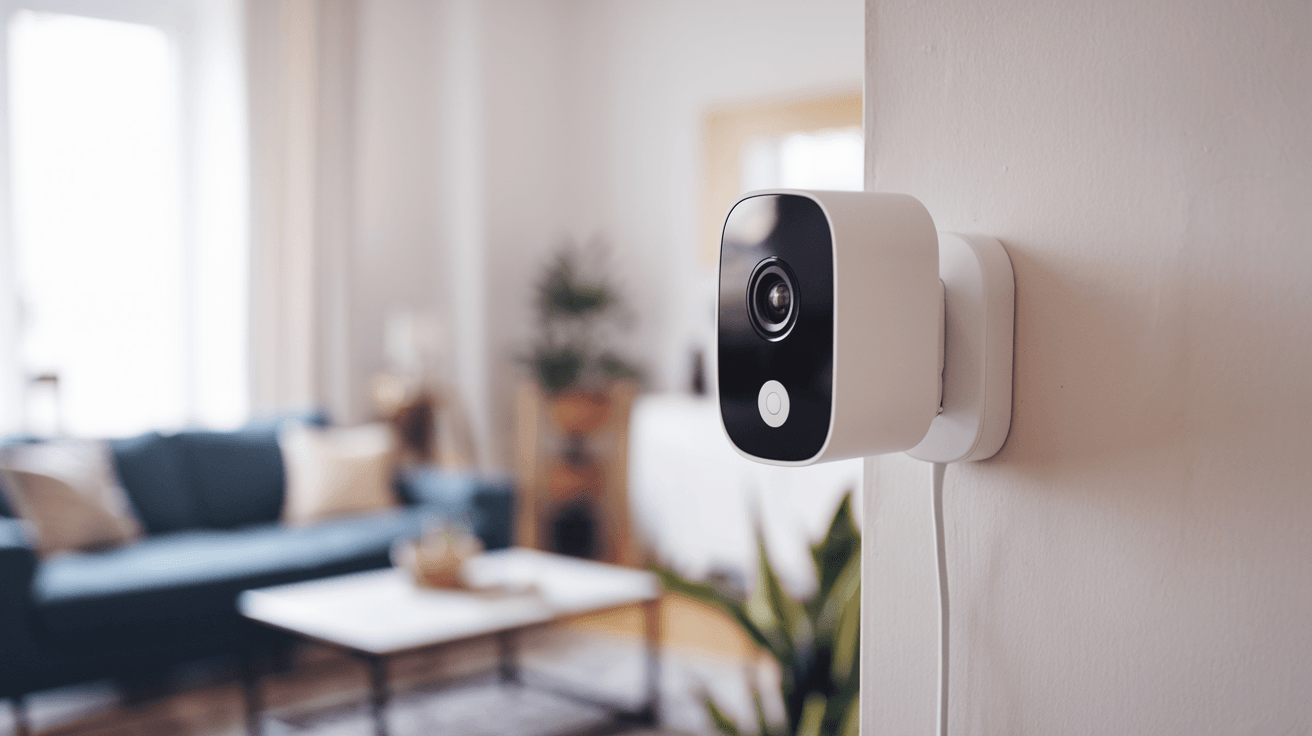
Place the camera on a stable surface or use the supplied mounting accessories as directed for your particular revision. The EC70 is an indoor model, not an outdoor weatherproof camera. Keep it away from direct water exposure, high heat, loose power cables and positions where children or pets could pull it down.
A corner or a high shelf may give a useful view of a shared room, but pan/tilt does not mean the camera simultaneously records every corner at full detail. Test actual blind spots, lighting, router signal and the camera’s intended field of view before relying on footage.
2. Power the camera and connect the app
Use the correct power adapter for your hardware revision. Install the official Kasa Smart app or follow the model-specific instructions in TP-Link’s support guide. Complete onboarding with an account you control and the permissions needed for the intended functions. Some TP-Link materials also explain management through the Tapo app; use the app and feature support documented for your particular firmware.
3. Use a compatible 2.4 GHz Wi-Fi network
The EC70 V4 specifications list 2.4 GHz Wi-Fi. A router advertising both 2.4 and 5 GHz is not necessarily incompatible, but the setup needs a suitable 2.4 GHz connection. If onboarding fails, verify the SSID, password, signal strength and any guest-network restrictions. Avoid exposing the camera directly to the public internet.
4. Check the camera view and alerts
After connection, test the live feed, two-way talk, motion or sound notification settings and pan/tilt controls. The manufacturer lists 1080p resolution, infrared night vision rated up to 30 feet and motion tracking for EC70 V4. Those are manufacturer specifications, not our own measurements; the actual view depends on lighting, distance and obstructions.
5. Update firmware and secure the account
Check TP-Link’s support page for the correct hardware-version firmware and follow official update instructions. Use a unique password for the linked account, enable any additional sign-in protections made available by the provider, keep your phone updated and review which household members have access. Avoid sharing credentials in chat messages.
Local microSD Recording vs Kasa Care Cloud Clips
The EC70 can store recordings on a compatible microSD card, sold separately. TP-Link also describes Kasa Care, an optional cloud subscription for recorded activity clips in supported regions. These solve different needs; not every cloud feature is part of the free local-recording workflow.
| Question | Local microSD | Kasa Care cloud |
|---|---|---|
| Extra hardware? | Compatible microSD card, separately purchased | Internet connection and compatible subscription |
| Typical use | Local continuous recording configured in app | Stored event clips and supported cloud features |
| Recurring fee? | No cloud subscription required for eligible local recording | Subscription terms and regional availability apply |
| Access when camera is damaged? | Card can be lost with the device | Previously uploaded clips may remain subject to retention terms |
| Important caveat | Capacity, formatting and compatibility matter | Retention, privacy and charges depend on plan |
According to TP-Link’s microSD compatibility guidance, a Class 10 (U1/V10) or better card is needed, and endurance-oriented cards are recommended for continuous recording. Compatibility varies by model and version. The company maintains a compatibility list, including cards that do not work correctly.
How to install a microSD card
TP-Link’s camera microSD installation guide describes access to the card slot on Kasa Spot Pan Tilt cameras by tilting the camera lens up. Follow the manual for the exact revision, orient the card correctly and never force it into the slot. After installation, check whether the app prompts you to format the card and enable continuous recording.
Before formatting, make sure there is no footage you still need, since formatting typically removes stored data. When the storage fills up, some Kasa models overwrite the oldest recordings. A memory card is not a backup strategy for incidents in which the device or card may also be damaged or removed.
Can the EC70 work without Kasa Care?
For supported local recording and live monitoring features, TP-Link describes microSD recording without a cloud subscription. But cloud event-clip retention and certain added options require a qualifying Kasa Care plan. Confirm the functions you need in the app and on the current Kasa Care plan page; regional terms may differ.
Privacy Settings: What to Review
Privacy Mode
TP-Link describes a Privacy Mode that stops streaming and recording audio and video while enabled. Supported controls and screens depend on app, hardware and firmware. Check whether your EC70 offers this mode and test its behavior before assuming it is active. If you need certainty, disconnect the device from power when it is not in use.
Camera placement and access
Avoid aiming an indoor camera into neighbors’ windows, shared private areas or spaces where people reasonably expect privacy. Inform other household members and guests when recording may occur. Local rules for audio and video recordings vary; private household use is not a blanket exemption for every recording or sharing situation.
Data, cloud storage and sharing
If you enable cloud storage, review the vendor’s current terms, retention periods and deletion options. Be cautious when sharing clips of children, visitors or neighbors. A saved video file may contain location and personal details even when you did not intend to record them.
Pet Monitoring, Children and Home Security: Set Realistic Expectations
An EC70 may help you glance at a pet or check whether there is movement in a room. However, it should not be treated as a certified safety device, a replacement for adult supervision or a medical baby monitor. Network failures, power cuts, blind spots and delayed notifications are possible. Do not rely on any general-purpose camera to detect a medical emergency, prevent injuries or guarantee the safety of a sleeping child.
For security planning, think of the EC70 as one monitoring component rather than a professional alarm service. If the purpose is outdoor entryway coverage, read our Blink doorbell and outdoor camera guide, since a purpose-built outdoor camera may better match that use.
Troubleshooting Common EC70 Problems
The camera is not connecting
Confirm the exact hardware version, use the correct power supply, check the 2.4 GHz network and move the device closer to the router during onboarding. Restarting network equipment may help some issues, but first review TP-Link’s official troubleshooting guide for the model rather than repeatedly resetting the device.
The microSD card does not record
Check capacity support, card health, compatibility, formatting and whether local recording has actually been enabled in the app. Continuous recording and cloud event recording are not interchangeable. A card that is recognized but contains no videos may require the correct recording setting, not a different subscription.
Notifications are too frequent or missing
Review motion sensitivity, notification permissions, mobile power-saving restrictions and internet connectivity. Test a real event in the intended room and check whether your model supports the selected detection options. Avoid assuming that a push alert is a guaranteed real-time warning.
Night vision seems poor
Infrared illumination is affected by glass, reflections, obstructions, distance and position. Clean the lens gently and avoid pointing it directly at reflective objects. The stated 30-foot range is a vendor specification, not a guarantee of recognizable faces at that distance.
Should You Buy the EC70 for Indoor Monitoring?
The EC70’s documented appeal lies in its pan/tilt view, 1080p video, local recording option and app-based alerts. Whether it is right for you depends on the exact model revision, your Wi-Fi, whether cloud storage is required and how comfortable you are putting a connected camera in the room. It is not automatically the safest or most private option for every household.
For a price comparison, everyday feature trade-offs and alternatives, see our Kasa EC70 review. For general connected-device risks and account-protection ideas, read our smart-home security guide. Neither guide can replace checking the current product manual.
Check the Kasa EC70 product listing on Amazon (affiliate link). Confirm the product number and hardware version before purchasing.
Frequently Asked Questions
Does Kasa EC70 use 5 GHz Wi-Fi?
The EC70 V4 specifications list 2.4 GHz wireless operation. For a dual-band router, check that the camera can connect to an appropriate 2.4 GHz network.
Is the maximum microSD capacity 128 GB or 256 GB?
It depends on the EC70 hardware revision: TP-Link’s V1 page lists up to 128 GB, whereas the V4 product page lists up to 256 GB. The model-specific compatibility list and instructions take precedence.
Do I need Kasa Care to save recordings?
TP-Link documents local microSD recording as an alternative to a cloud plan for compatible EC70 models. Kasa Care is used for optional cloud features and clip retention; check current regional plan requirements.
Does Privacy Mode stop audio and video?
TP-Link states that its camera Privacy Mode prevents video and audio streaming and recording while enabled. Confirm whether your exact firmware supports the option, then verify it is on before relying on it.
Can the EC70 replace a baby monitor or alarm system?
No safety or medical certification is established in this guide. Network-dependent cameras can miss events and should not replace adult supervision, specialized monitoring or appropriate safety equipment.
Is it suitable outdoors?
The EC70 is advertised as an indoor camera. Choose a properly rated outdoor device if your use case involves rain, outdoor temperatures or entrance monitoring.
Manufacturer sources: EC70 V4 specifications; EC70 V1 specifications; EC70 model-specific support; microSD compatibility; Privacy Mode. This is researched setup guidance, not a verified test of this particular camera.
Disclosure: This post contains affiliate links. If you make a purchase through these links, I may earn a small commission at no extra cost to you.